
Why Carlsbad Is Where Retired Athletes Come to Play Pickleball Seriously
Spend a morning at Poinsettia Park or a Tuesday session at one of Carlsbad's private club courts and you start to notice something about the players around you. They move differently. They compete differently. They have a relationship to sport that is not recreational in the casual sense. Many of them were serious athletes at some point in their lives, and the competitive identity that defined them then did not retire when their careers or their primary sport did. Pickleball is where that identity found a new home, and Carlsbad is where a remarkable concentration of those players ended up.
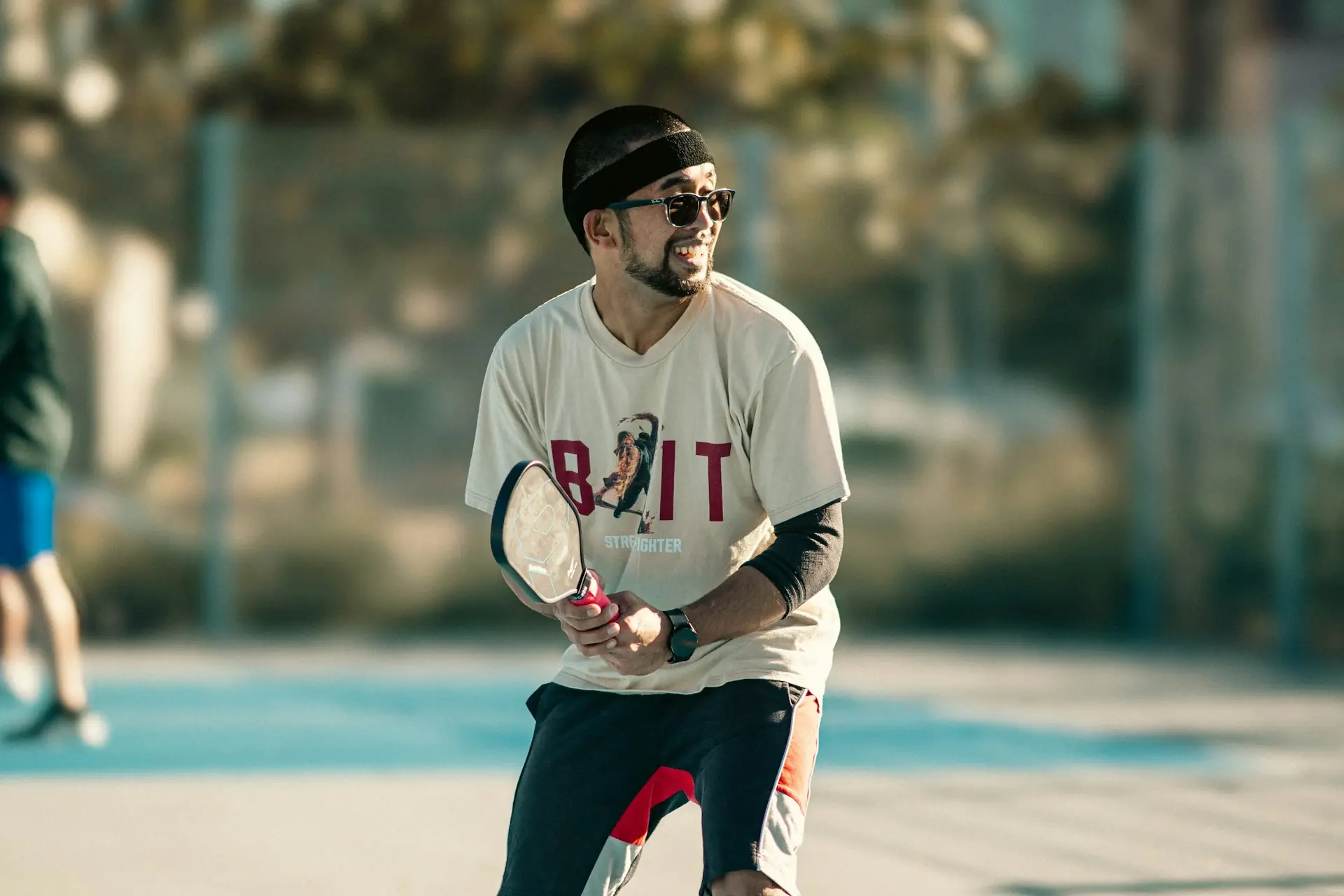
1. They Are Not Done Competing
The retired athlete demographic in Carlsbad is not a monolith, but it has a common thread that shows up across different sporting backgrounds and different life stages. These are people for whom competition was not simply something they did. It was how they understood themselves, how they organized their time, and how they measured their own growth. When the primary sport ended, whether through age, injury, career demands, or simple transition, the competitive identity did not go with it. It went looking for a new context.
For the former collegiate tennis player who settled in La Costa after a career in finance, pickleball was the sport that gave competition back at a physical cost they could sustain. For the retired triathlete whose knees finally said no to the run leg, it was the high-output competitive activity that replaced the structure three-sport training had provided for fifteen years. For the ex-college swimmer turned Carlsbad real estate agent, it was a racket sport that rewarded the physical intelligence and competitive instincts built over years of competitive swimming without requiring the shoulder load that had finally caught up with them. Different sports. Different life stories. Same fundamental dynamic: people who need competition the way some people need caffeine, and who found in pickleball a game that could supply it indefinitely.
The research on athlete identity after sport consistently shows that people who organized their sense of self around competitive athletic performance do not simply redistribute that energy into leisure when the primary sport ends. They find new competitive contexts. In Carlsbad, pickleball has become one of the primary new contexts for a significant portion of the city's former competitive athlete population. The courts here are not recreational in the generic sense. They are where competitive identity found a new address.
2. Why Carlsbad Specifically
The concentration of former competitive athletes in Carlsbad is not accidental. It reflects a deliberate convergence of factors that make North County San Diego one of the most attractive retirement destinations in the country for exactly this demographic profile.
The climate is the starting point. Year-round outdoor athletic life, with no extreme heat, no winter freeze, and no seasonal window that forces athletes to compress their training into a few tolerable months, is a genuine and rare asset. People who built their lives around daily physical training do not want to give up that structure when they retire. They want a place where it is not just possible but genuinely pleasant to be outdoors and physically active on any morning of the year. Carlsbad delivers that with a consistency that almost no other American city can match.
The community is the second factor. Carlsbad's active adult population is self-selected for physical engagement in a way that most retirement destinations are not. This is not a city of golf carts and early dinner reservations. It is a city of people who run the trails, surf before work, cycle the coast road on Saturday mornings, and who have built a social life around physical activity as an organizing principle rather than a leisure option. Former competitive athletes who retire here find peers who understand their relationship to sport in a way that is genuinely unusual and genuinely valuable.
The infrastructure is the third factor. Carlsbad's athletic amenities, from La Costa Resort's world-class facilities to the city's well-maintained public courts to the private clubs that have invested in pickleball programming as member demand has grown, give serious players access to the quality environments their competitive backgrounds make them expect. A former Division I tennis player does not want to play on a cracked asphalt court with a sagging net. Carlsbad's infrastructure meets the standard that its athletic population's history demands.
3. What Retired Athletes Bring to the Court
The specific athletic backgrounds that concentrate in Carlsbad's retired athlete population each bring something different to the pickleball court, and the cumulative effect of having so many of them in the same competitive pool is a community-level skill acceleration that is unusual in recreational sport at any level.
- Former tennis players: The largest single athletic background in Carlsbad's pickleball community and the one with the most direct technical transfer. Court geometry, ball-reading, competitive point construction, net play instincts, all of these translate from tennis to pickleball faster than players without that background can develop them through open play alone. The adjustment challenges, primarily the dink game and the third-shot drop, are specific and learnable, and the tennis background makes everything else come together quickly enough that a focused coaching program gets them to competitive level in weeks rather than months.
- Triathletes and endurance athletes: The physical conditioning and mental discipline that sustained multi-sport competitive training produces are enormous assets in a sport that rewards both. Triathletes in particular tend to approach pickleball development with the systematic, data-oriented mindset they brought to their training programs, which makes them among the most coachable and fastest-improving players in the sport. They are also physically capable of maintaining the intensity of serious competitive play long into their athletic second act in a way that athletes from higher-impact sports sometimes cannot.
- Team sport athletes: Former competitive soccer, basketball, and volleyball players bring spatial awareness, reactive athleticism, and doubles partnership dynamics that transfer directly to pickleball's team play structure. The reading of a partner's position, the communication under pressure, the anticipation of an opponent's next move, these are skills that team sport backgrounds develop over years and that pickleball rewards immediately and continuously.
- Swimmers and water polo players: Upper body strength, shoulder mobility, and the precise stroke mechanics that competitive swimming and water polo develop create paddle control and power generation advantages that less athletically experienced players cannot easily replicate. The competitive mental toughness of lap training and open water competition translates into a resilience in tight matches that is visible from the first time these athletes step into a competitive rotation.
Athletes with competitive backgrounds in other sports are not just better at pickleball from the start. They are more coachable because they already understand how to receive technical feedback, how to implement corrections under pressure, and how to practice with intention rather than simply accumulating time on the court. A coach working with a former competitive athlete in Carlsbad is working with someone who already knows how to train. That changes what is possible in a coaching session fundamentally.
4. Why Pickleball Fits the Second Act
Every sport that attracts former competitive athletes as a second-act competitive outlet has specific features that make it work for that demographic. Pickleball's fit with Carlsbad's retired athlete population is specific enough to be worth articulating clearly, because it explains both why the sport has taken hold so completely here and why the players it attracts are so much more serious about developing their game than casual recreational participation would suggest.
- The physical demand is sustainable long-term: Tennis at a serious competitive level takes a physical toll that eventually forces most players to either step back significantly or stop competing entirely. Pickleball's smaller court, underhand serving motion, and lower-impact movement patterns allow athletes to compete at a genuinely serious level well into their sixties, seventies, and beyond without the cumulative joint and cardiovascular load that ends competitive careers in higher-impact sports. For athletes whose identity is built around competition, the ability to keep competing without the physical cost that ended the first chapter is not a minor convenience. It is the reason the sport works as a long-term competitive home.
- The skill ceiling is high enough to stay interesting: One of the most common failure modes for former competitive athletes in recreational sports is boredom. They master the accessible technical elements quickly, encounter the skill ceiling of a sport with limited depth, and disengage because there is nothing left to chase. Pickleball does not have this problem. The dinking game alone has enough tactical and technical depth to occupy a serious player's development attention for years. The sport rewards continued investment in a way that keeps competitive athletes genuinely engaged across the long athletic second acts that Carlsbad's coastal lifestyle supports.
- The competitive structure is immediately accessible: Unlike golf, which requires months of skill development before the competitive experience becomes enjoyable, or tennis, where the learning curve can be discouraging for athletes whose competitive instincts make beginner incompetence particularly uncomfortable, pickleball allows former athletes to enter organized competition relatively quickly after starting. The basic mechanics are accessible enough within weeks of starting that a player with a strong athletic background can participate in competitive open play and low-level organized competition while still very much in the development phase of their game.
- The social structure matches the team sport experience: Former team athletes in particular find in pickleball's doubles format a social competitive experience that individual sports cannot replicate. The partnership, the communication, the shared accountability for a point's outcome, these are dimensions of competitive experience that many former team athletes have been missing since their team sport careers ended and that pickleball provides in a package that fits into a two-hour morning session.
5. How This Group Approaches Coaching
Carlsbad's retired athlete population approaches pickleball coaching with the same systematic intentionality they brought to athletic development in their primary sports. This is not a group that takes a few lessons and considers themselves coached. It is a group that has spent enough time on the receiving end of quality instruction to understand what good coaching produces and what the absence of it costs in development time and reinforced bad habits.
The specific things this group looks for in a pickleball coach are different from what purely recreational players prioritize. They want a coach who can look at their game, identify the specific technical gaps and the sport-specific translation challenges their background introduces, and build a program that addresses those things directly rather than running a generic beginner curriculum that wastes the advantages their athletic history already gave them. They want honest feedback rather than encouraging generalities. And they want measurable progress, because measuring progress is how competitive athletes understand whether their training is working.
The coaching relationship this produces is among the most productive available in any recreational sport. A coach working with a former competitive athlete in Carlsbad is working with someone who trains deliberately, implements feedback consistently, and maintains the session regularity that produces compounding improvement. The result is development that happens faster and holds better than it does with players who lack that competitive training background. For coaches, this is genuinely the most rewarding segment of the market to work with. For players, it is the clearest argument for seeking out a coach who is calibrated to this specific level of athletic sophistication rather than one whose curriculum is built around the beginner experience.
Our guide to pickleball lesson pricing in Carlsbad covers what that kind of targeted coaching investment looks like in this market, and our court guide walks through where to play throughout the city so the logistics of a coaching program are sorted before the first session rather than worked out afterward.
Former competitive athletes have typically spent years receiving technically precise, unsentimental feedback from coaches who prioritized accuracy over comfort. When they bring that expectation to a pickleball coach and receive vague encouragement instead of specific correction, they disengage quickly and accurately. A coach who can look at a former college tennis player's third-shot drop and say precisely what the paddle angle, the swing path, and the contact point need to do differently earns a level of trust and engagement that no amount of motivational energy can substitute for.
6. What They Do to a Pickleball Community
The concentration of former competitive athletes in Carlsbad's pickleball community has a cumulative effect on the overall level and culture of the sport here that is worth understanding for anyone entering it, whether they share that background or not.
The most visible effect is on the average competitive level of open play. When a meaningful share of the players at any given facility have decades of competitive athletic experience behind them, the baseline skill ceiling of recreational open play rises significantly above what a demographically typical suburban market would produce. Players who move to Carlsbad from other parts of the country and show up at Poinsettia Park expecting the kind of recreational open play they experienced in their previous city regularly find a substantially higher competitive bar than they anticipated.
The second effect is on the culture of improvement. Communities with a high proportion of former competitive athletes tend to treat development as a norm rather than an exception. Coaching is what serious people do. Structured practice is how you actually get better. The willingness to acknowledge specific weaknesses and work on them systematically, rather than simply playing and hoping improvement happens by osmosis, is a shared value rather than an individual quirk. That culture raises the developmental expectations of everyone in the community, including players who did not come from competitive athletic backgrounds, simply by setting a visible standard of what serious engagement with the sport looks like.
The third effect is social. Competitive athletes tend to build community around competition and shared athletic experience in ways that produce deep and durable friendships. The Carlsbad pickleball community's retired athlete core has created social bonds around the sport that extend beyond court time and into the broader outdoor recreational life of the city. Players who enter this community through pickleball find themselves connected to a social network built around active, competitive people who share not just a sport but a fundamental orientation toward life as a physical, competitive adventure. That is a rare and valuable thing to find in a recreational sport, and it is specific to Carlsbad in a way that most comparable cities in California cannot replicate.
7. Carlsbad vs. Other California Pickleball Markets
| Factor | Carlsbad | Palm Springs Area | Santa Barbara | Inland Suburb |
|---|---|---|---|---|
| Retired athlete concentration | Very high, multi-sport backgrounds | High, golf-adjacent demographics | Moderate, university town mix | Low to moderate |
| Year-round playing climate | Excellent, coastal mild | Good except summer extremes | Excellent, coastal mild | Limited by heat or cold |
| Average open play competitive level | High | Moderate to high | Moderate | Low to moderate |
| Coaching market quality ceiling | High, competitive demand driven | Moderate, resort-oriented | Moderate | Variable |
| Social community depth around sport | Deep, athlete identity driven | Moderate, lifestyle oriented | Moderate | Shallow |
| Infrastructure quality | High, resort and public mix | High, resort concentrated | Moderate | Variable |
8. Frequently Asked Questions
Why do so many former competitive athletes end up playing pickleball in Carlsbad?
The convergence of Carlsbad's year-round coastal climate, its self-selected active adult population, and its high-quality athletic infrastructure creates an environment that is unusually attractive to former competitive athletes seeking a place where their relationship to sport and physical activity fits naturally into daily life. Pickleball specifically fits this demographic because it provides genuine competition at a physical cost sustainable into later life, has a skill ceiling deep enough to reward continued development, and offers a social structure through doubles play that many former team athletes find meaningful in ways that individual recreational sports cannot match.
I am a former tennis player. How quickly can I become competitive in Carlsbad pickleball?
With focused private coaching, most former competitive tennis players can reach functional competitive level in Carlsbad's recreational scene within four to eight weeks. The technical advantages your tennis background provides, court awareness, ball-reading, competitive point construction, are substantial enough that the adjustment work is specific and targeted rather than foundational. The main challenges are the dink game, which requires unlearning tennis aggression habits, and the third-shot drop, which has no real tennis equivalent. A coach who understands both sports can address these directly and get you to competitive readiness significantly faster than open play alone would produce.
Is the pickleball open play in Carlsbad appropriate for recreational players?
It depends entirely on which facility and which session you attend. Morning open play at Poinsettia Park draws Carlsbad's most competitive players, including a significant number with serious athletic backgrounds, and can be intimidating for players without a comparable foundation. Afternoon sessions and facilities like Calavera Hills Community Park offer more accessible competitive environments for developing players. A short private coaching program before entering the open play rotation at the more competitive facilities is the most reliable way to ensure the experience is productive rather than discouraging.
What kind of pickleball coach works best for former competitive athletes in Carlsbad?
Former competitive athletes in Carlsbad benefit most from coaches who understand their background, can identify the specific advantages and the specific bad habits it introduces, and are willing to deliver honest technical feedback rather than generalized encouragement. The ideal coach for this demographic is one who has worked extensively with athletic populations transitioning from other sports, who can distinguish between technical errors caused by inexperience and those caused by competing sport habits, and who builds a program around closing specific gaps rather than running a standard beginner progression that wastes the significant foundation the athlete already has.
How does Carlsbad's climate affect pickleball development for serious players?
The year-round playing climate is one of Carlsbad's most significant advantages for serious player development. Without the seasonal disruptions that force players in other markets to compress their development into a few months and then restart, Carlsbad players can build genuinely continuous improvement programs across the full calendar year. Twelve months of consistent coached practice and competitive open play produces development results that are simply not replicable in markets where the playing season is significantly shorter or where summer heat or winter cold forces extended breaks in the training rhythm.
A Serious Game for Serious Athletes
If you came to Carlsbad with a competitive athletic background and you are not yet playing pickleball seriously, you are leaving something on the table. The sport fits your history, your instincts, and the lifestyle you chose this city for. Golden Racket Academy coaches in North County San Diego work specifically with players who bring athletic backgrounds to the court and who want instruction calibrated to that starting point rather than a beginner curriculum that treats decades of competitive experience as irrelevant. Private sessions at your court, focused on the specific work your background makes possible and necessary, delivered without the resort overhead.