
Pickleball for Beginners: Your First 5 Steps
Last updated: October 29, 2025
New to the sport? This practical guide to pickleball for beginners shows you how to play pickleball from day one—what gear to bring, the basic rules, the shots you’ll use most, simple drills, and a 2-week plan to get rallying fast.
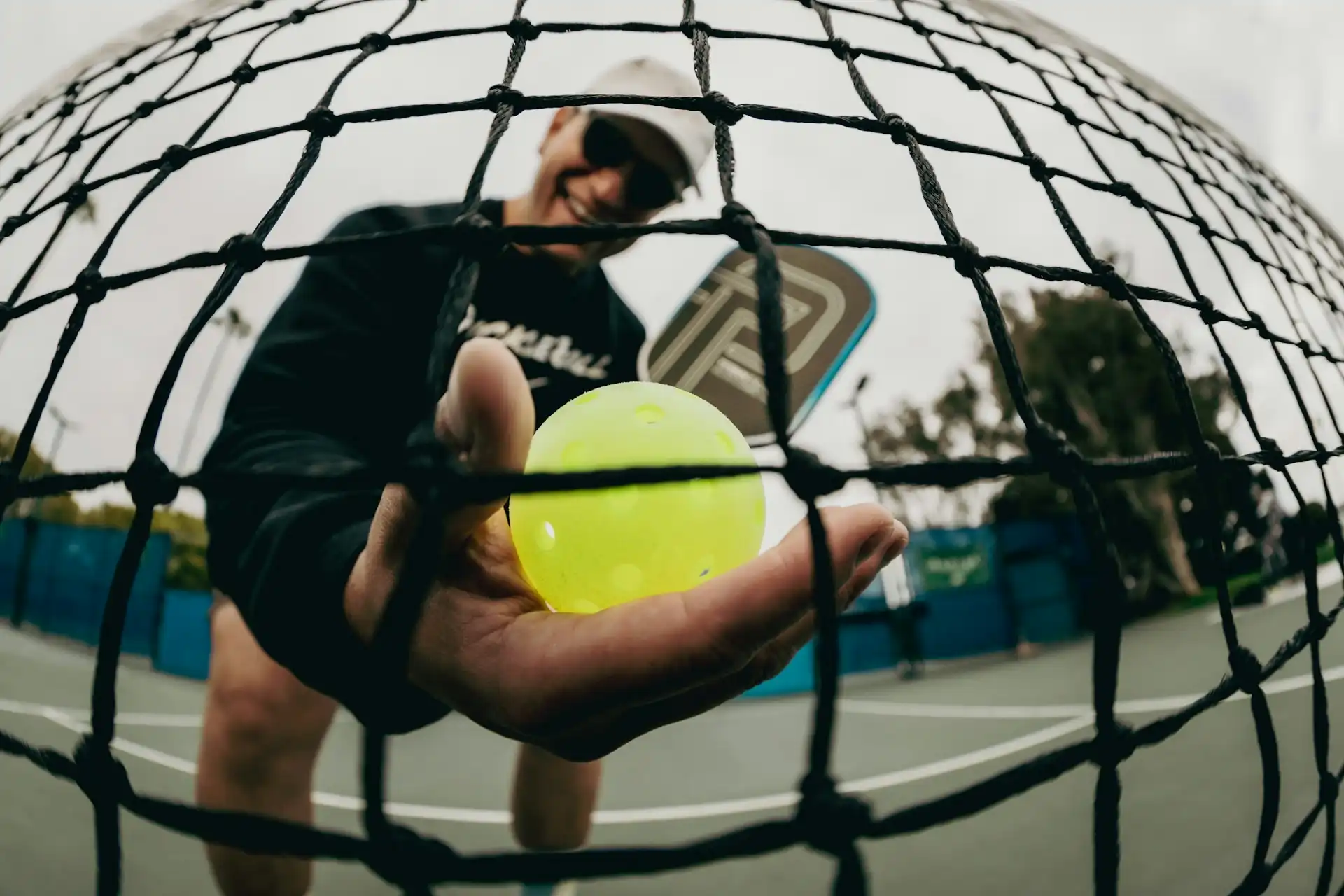
Step 1 — Get the Right Starter Gear
Keep it simple and comfortable. The goal is control, not power. Here’s a quick checklist to make pickleball for beginners affordable and practical:
| Item | What to Look For | Notes |
|---|---|---|
| Paddle | Midweight (7.6–8.2 oz), medium grip, balanced feel | Composite or graphite is fine to start |
| Balls | Outdoor balls (40 holes) for most city courts | Indoor balls (26 holes) if you’re in a gym |
| Shoes | Court shoes with lateral support | Avoid running shoes—less side stability |
| Extras | Water, small towel, hat/sunscreen | Overgrip helps comfort & sweat control |
Step 2 — Learn the Court & the Rules
The court is 20×44 feet for both singles and doubles. The “kitchen” (non-volley zone, NVZ) extends 7 feet on each side of the net. Key rules for how to play pickleball:
- Two-bounce rule: The serve must bounce, and the return must bounce, before volleys are allowed.
- NVZ (kitchen): Don’t volley while standing in the kitchen or if your momentum carries you into it.
- Scoring: Only the serving team scores. Games are commonly to 11 (win by 2).
- Serve basics: Underhand, contact below the waist, serve diagonally.
For full detail, browse the official resources: USA Pickleball — How to Play and the Official Rulebook.
Step 3 — Master the Core Shots (With Simple Cues)
Dinks (soft shots at the NVZ)
- Cue: Paddle out front, soft grip, push through the ball with a compact motion.
- Goal: Clear the net by a paddle height; land near opponent’s kitchen line.
Third-Shot Drops
- Cue: Smooth swing, open paddle face, arc the ball to drop into kitchen.
- Goal: Land past the net and bounce below net height to slow the rally.
Resets (from mid-court under pressure)
- Cue: Absorb pace, slightly open face, soft hands back to kitchen.
- Goal: Neutralize a fast ball and buy time to get to NVZ.
Serve & Return
- Serve cue: Smooth toss, contact in front, aim deep corners or at the body.
- Return cue: High-percentage to the middle third; prioritize depth over pace.
Step 4 — Beginner Drills You Can Do Today
Solo (10–20 minutes)
- Shadow steps: Split step on a timer (every 3 seconds), shuffle and recover.
- Wall dinks: Stand close to a wall; 20 controlled contacts without error.
- Serve targets: Place two cones wide/T; 10 serves to each.
With a Partner (20–30 minutes)
- Kitchen dinks: Cross-court, 10-ball rally per side x 3 sets.
- Drop progressions: Feed from baseline; land 6/10 drops into the kitchen.
- Transition resets: Start at mid-court; reset 5 balls in a row back to kitchen.
Step 5 — Play Your First Games (And Keep It Fun)
- Start with mini-games: First to 7 points; serve alternates; focus on one cue.
- Simple pattern: Deep serve → deep return → third-shot drop → move to NVZ together.
- Etiquette basics: Call the score clearly before serves, give line calls generously, and mind NVZ foot faults.
Two-Week Starter Plan
| Day | Focus | Benchmark |
|---|---|---|
| Week 1 • Day 1 | Rules + kitchen dinks | 10 cross-court dinks each side without error |
| Week 1 • Day 2 | Serve targets + returns | 8/12 serves to two targets; returns land deep middle |
| Week 1 • Day 3 | Third-shot drop basics | 5/10 drops land and bounce below net height |
| Week 2 • Day 1 | Transition resets + footwork | 6 controlled resets from mid-court back to kitchen |
| Week 2 • Day 2 | Pattern play (serve-return-drop) | Win 3 mini-sets to 7 using your pattern |
| Week 2 • Day 3 | Open play or friendly doubles | Track 3 “quality points” with a clean drop + NVZ |
Each session: 6-minute warm-up → 15 minutes primary drill → 10 minutes secondary → 5 minutes serves → 5 pressure points → 2-minute notes (one win, one focus).
Common Beginner Mistakes (Quick Fixes)
- White-knuckle grip: Loosen grip to a 4–5/10—touch beats force.
- No split step: Add a soft hop as your opponent contacts the ball.
- Blasting third shots: Use arc and height; aim for a soft bounce in the kitchen.
- Volleying in the kitchen: Check your feet after every volley—reset behind the line.
- Chasing winners: Build patterns: deep serve/return, then drop, then NVZ.
Do I Need a Coach?
You can go far with this plan and a wall, but many beginners level up faster with short, focused feedback. A great coach keeps you on one priority at a time and prevents bad habits early. We’ll meet you at your building court or a nearby public court, set two measurable targets, and send a quick recap so you know exactly what to practice.
FAQ — Pickleball for Beginners
How often should I practice?
Two on-court sessions plus one optional wall session per week is a sustainable start.
How to play pickleball if courts are packed?
Use a hitting wall or a quiet corner to practice dinks and drops for 15 minutes, then check again—courts turn over quickly.
When will I feel “match ready”?
Most beginners can rally and keep score confidently after 2–3 weeks following the plan above.
Bottom line: Keep sessions short, focus on one cue, and stack small wins. This pickleball for beginners blueprint gets you playing confident points fast—then we’ll help you level up.